Switching from Conventional to Sustainable

Agriculture appears to be undergoing a serious transformation – a new paradigm, sometimes called ‘Regenerative Agriculture’, or ‘Agro-ecology’, is turning conventional (aka: ‘industrial’) agriculture upside down. At the same time, the Green New thinking and Climate Change are rapidly reaching a crescendo in public awareness. But few people are aware of the impact that this new version of ‘AG’ could have on energy, climate, and the global crisis in general. Much less do they comprehend the speed at which those changes could take place, in agriculture, compared to other sectors. We need to look at those numbers.
But first, what exactly are we talking about, with these radical changes in agriculture and the overall ‘food system’? We have already looked at many aspects that could improve, including: area-wide coordination, habitat protection, ecosystem benefits, soil health, and water supply management. But these are abstract topics to most people outside the field. What do the differences look like in practice, in ways that are easier to understand? Let’s take a closer look, before running ‘the numbers’. What do ‘conventional’ and ‘regenerative’ agriculture actually look like?
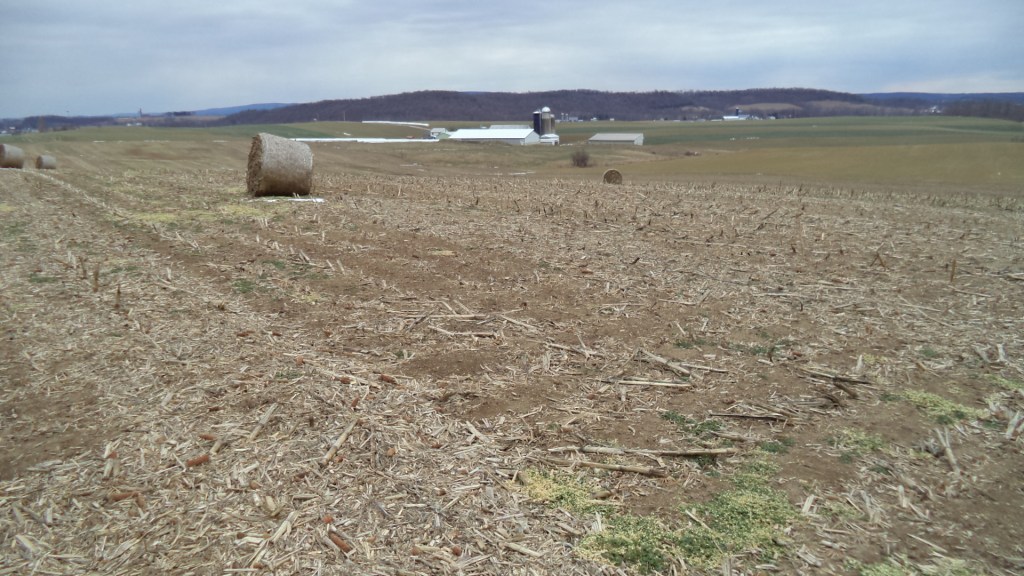
The majority of cropland in the U.S. is still under conventional management –picture a typical GMO corn/soy and hay operation. A conventional farm is set up to maximize gross production in the short term, with little concern about long term impacts and external costs. It assumes that technology and science can evolve to counter any natural deficiencies. Soils may be degrading, but fertilizers will evolve to make up for it. Pests may be increasing, but better pesticides will be coming. ETC. A conventional farm attempts to use every square inch for cash crop production, made as level, uniform and unobstructed as possible, so that machinery with 90’ widths can crisscross easily. Hedgerows, windbreaks, streams, ponds, outcrops, wetlands, trees, cemeteries, hiking trails, etc. – all are removed or minimized. Wildlife is actively ‘excluded’. Monocultures of agronomic commodity crops are grown, such as corn, soybeans, wheat, sugar beets — almost all annuals, and largely GMO. In between growing seasons, soils are managed only to optimize the cash crops and the bottom line, which usually involves repeated tillage and little or no ground cover, leaving bare soil surfaces to erode via wind and water. Crops are wholesaled in a globalized vertical marketing system, leaving few options to growers. Pesticides and fertilizers are heavily applied. Conventional farms use very high levels of inputs and machinery passes to maximize the gross output of cash crops, in accordance with markets, loans, subsidies, and production dictates. Human labor is minimized – the process is almost entirely mechanized and automated.
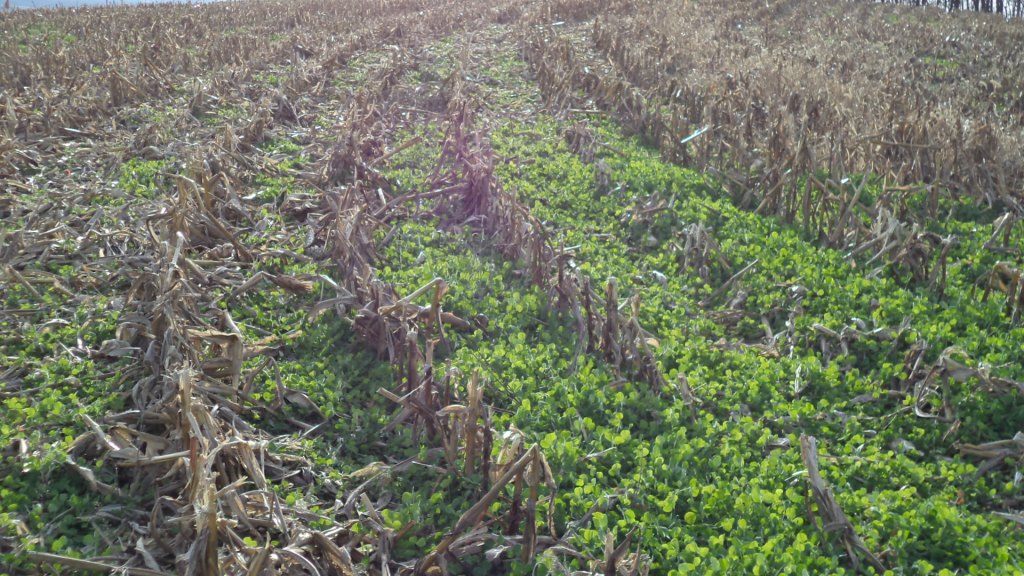
Regenerative farms see natural processes as a benefit rather than competition. Ecological systems, along with pollinators, microbes, are the basis for production. Farming is considered stewardship rather than resource extraction. The general layout of a regenerative farm may look very similar to conventional farms, but the ingredients are very different. Instead a dominant cash crop, growers choose from a full spectrum of plants and animals, fine tuned for a variety of functions. Plants include cover crops, inter crops, companion crops, multi-cropping, and many other roles. This mimics nature, aka: ‘farming in the image of nature’. Locally adapted, heirloom, or indigenous plant species are assumed to have innate advantages. Natural features (birds, insects, pollinators, trees, shade, windbreaks) all have functional roles to play. In general, the gross output of each cash crop may be lower than with conventional farms. But the overall inputs in terms of fuel, tillage, transportation, fertilizers, pesticides, etc. are greatly reduced. Best of all, the NET profits are likely to be better than conventional, even in the short term. If longer term benefits are considered, regenerative is clearly a better system, by any measure – according to its proponents.
By engaging with natural systems and a wider range of species and methods, regenerative farming can be much more complicated to design and implement. A wider range of knowledge, expertise, specialization, tools and machinery are generally required, encouraging economies of scale or collective multi-farm, cooperative approaches. Labor and rural development are likely to scale up to meet these needs. In comparison, conventional operations may look very simplistic and uniform. They can be clean to the extent of barren, literally.
For an exhaustive definition of ‘regenerative’ farming, see a paper by Jonathan Lindgren at – https://f1000research.com/articles/10-115/v1
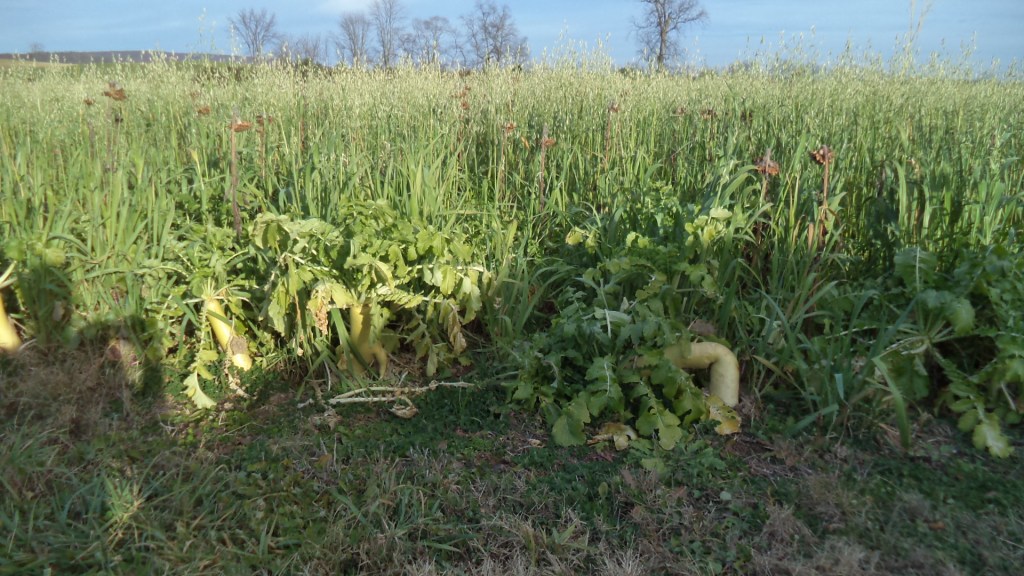
Making the Change: The critical question: what does it really take to flip from conventional to regenerative ag? I believe that it can happen very quickly, if external factors can be mobilized. As mentioned above, the general layout of operations may change very little, while the features will change a lot. But most of that change will involve scaling down operations, rather than scaling up. Much of the change is a matter of what is not done, and not disturbed, rather than what must be added. Buffer areas, natural areas, perennial crops, grazing areas, No-till or minimum tillage, can all drastically reduce the level of inputs and impacts. While each such farm will continue to develop and change over time, the initial conversion, in a crude sense, can happen very quickly. The Ecosystem and climate benefits begin as soon as the conventional operations stop.
A switch from conventional to regenerative methods is just one piece of the puzzle – but it is a very big one, with wide ranging effects. So how many (hundred) million acres are we talking about, potentially, for this change? The next chapter will take a rough look at some of these numbers, but first:
The BIG Picture
There is a larger framework to be considered if we are to make any sense of the upcoming calculations. The change presented above is not something that only affects individual farms. Rather, it can change a whole industry, and to some extent, a whole culture. Here’s why.
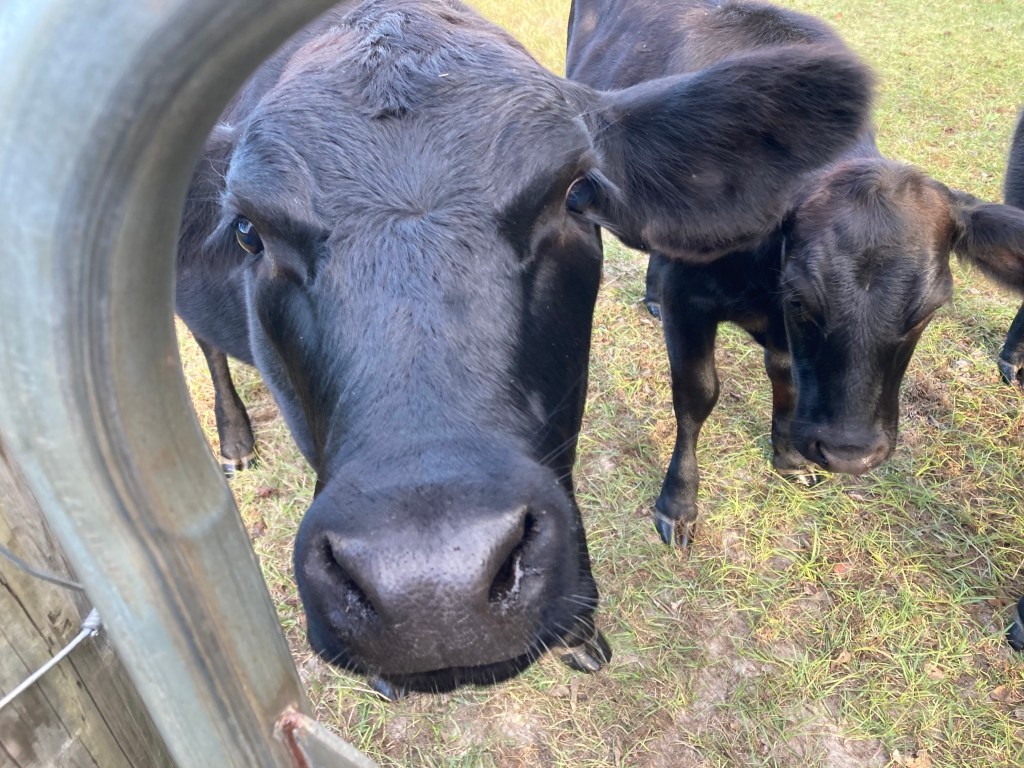
To make a long story short — COWS. Americans love beef, but are not crazy about industrial feedlots. Regenerative plays right in to that. Regenerative is widely associated with soil health, and soil health, by current definition and reasoning, must have a grazing component. In addition to soil health, that grazing component often makes a critical difference in terms of annual cash flow to those who are going from conventional to regenerative. Whether it is grass fed beef, dairy cows, llamas, pastured pigs or buffalo, it can generate a very valuable and sought-after commodity, and as a result, these farmers tend to be doing very well with net incomes. This profitability may help to facilitate a shift of millions of acres of croplands from a status of animal-free to heavily-grazed, for all or part of the year. The result may change the whole food system, eliminating many remote feed lots and range lands, building local industries and communities, slashing transportation costs and related energy costs, improving diets and health, and changing the look and feel of American landscapes. For those who fear that sustainable agriculture may threaten their beef supply, it may be quite the opposite.
What happens when millions of grazing animals are relocated from rangelands and feedlots into formerly conventional farm operations? Can we handle all that meat? Currently, much of the grazing is happening on range land, which might otherwise be kept as natural areas, public or private, and not well suited to crops (due to slopes, soils, moisture…). How much of that grazing capacity could be shifted over to regenerative farms, and what would that mean for climate, biodiversity, water quality, etc? And how many million acres are involved?
This conversion outlined above is only one part of the picture. Other rural land uses that could convert towards sustainable methods include: pasture and dairy; forestry – silviculture; orchards, and fruit; natural areas; desert and barren lands. And development, of course, will play a big role, as farm acreage converts to urban, residential, etc. Many parties are working on mapping and quantifying these land uses and trends, including the USDA, the Interior Department, USGS, States, universities and NGO’s such as Nature Conservancy. The finance industry is also very interested.
Next: The Numbers
How many millions of acres are we talking about?
Ag_The_Changes.docx
 Panicaea
This makes me feel much more optimistic about sustainable agriculture.
LikeLike