Chapter 1 – GRAP

Introduction to the Global Re-alignment Process
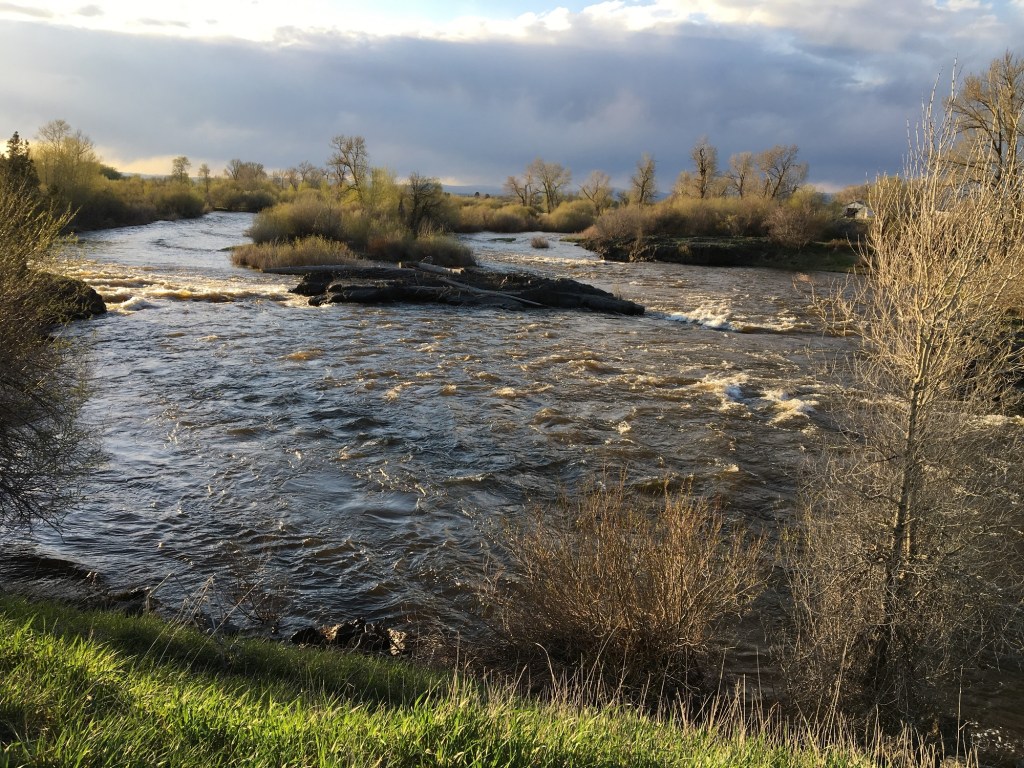
Snake River, Idaho

Our planet is having some extraordinary problems –   Climate Change, Biodiversity, wars, pandemics and plagues, poverty and social injustice…..   There are many opinions about how to turn it around, and many people feel that the situation is hopeless. 

Most agree that our challenges need to be faced with a new clarity, urgency and collaboration. The current rate of progress is too slow.  There is a big gap between good intentions and poor results, between plans and outcomes.  GRAP offers a simple strategy to inform and support workable, collective solutions. 

GRAP is not a new idea, and there are many such efforts currently underway. The question is:  what next, and how to accelerate?   This paper will consider some of the efforts underway, and how they might be improved.

GRAP Basics

The GRAP process is simple:

  1. Identify the main issues

2) Identify the parties involved

3) Identify and verify the actual objectives of each party 

4) Make that information transparent and accessible 

In summary, Find out Who’s doing What, and present that information in a straigtforward information tool.  The primary goals are better engagement, focus, and alignment, on a wholistic scale.   That outcome requires a fully collective approach, across all sectors, and a pervasive sense of shared accountability.  These are the basic ingredients needed to make GRAP, or any other system, work.  

GRAP is the first step in any kind of solution – it helps establish WHO is doing WHAT.  All other solutions really depend on this basic information in order to succeed. 

The following chapters will explain how it works, and present some real-world examples. 
A Framework for Collaboration

Systems become successful when they are aligned around common values and interests – as seen in sports, shopping, travel, and food. In the process, these systems tend to produce information tools that support the activity – such as sports news, advertisements, maps, stock exchanges, indexes, catalogs and websites. In the case of environmental concerns, there is no such collective information framework at this time. Throughout the industry, decision makers have no easy way to know what eachother are doing and thinking, collectively. There is no pervasive framework for decision making, despite the high levels of concern and alignment around core environmental issues.

This may be simple to fix!

This image has an empty alt attribute; its file name is img_20150721_195233242_hdr.jpg
Mifflinburg PA

What’s the problem here?

  • Many agencies and corporations do not clearly publicize their real objectives regarding environmental outcomes.  
  • The public does not have a good way to find out what outcomes these parties are actively pursuing.  
  • A discovery and presentation of those objectives, across all sectors, would facilitate awareness, alignment and collective accountability.
  • Without shared accountability, positive outcomes are unlikely.

This approach has no pre-requisites, and can be started up anywhere, any time, by any parties.  In most cases, the resources, methods and policies needed to move forward are in place already.  The main problem with environmental concerns lies with implementation, coordination, and follow-through. In the absence of such coordination, other motives that are better aligned, such as fear or profits, will determine outcomes.

Actual conditions in the real world, and reasons for such, are very poorly understood in most cases. Activists, analysts, and the general public rarely look to ground-level implementation when they want better results.  Instead, they look towards legislation, policy, politics, leadership, funding, news media, administration, etc.  Rarely do they know what is actually happening in the real world, where case managers sign permits, and programs interact hands-on with problems. But that is the place where results are ultimately determined.   

The following pages will present a simple method to improve collaboration, using tools that have proven effective in many other systems. Simple, but not necessarily easy.

This image has an empty alt attribute; its file name is img_20150719_151807888.jpg
Penns Creek, PA

The first chapter is an introduction to what we are calling the ‘Global Re-alignment Process’, or GRAP.

The Current Setting –

Separation, isolation, confusion, and mis-alignment

Penns Creek, Coburn, PA

We are in a critical and exciting time for the environmental ‘Movement’.  There are sobering ‘challenges’, such as wars, pandemics, climate change, collapse of biodiversity.  But money is pouring in!  Politics appear favorable!  Facts are undeniable!   Time to celebrate? I don’t think so

Many of the old tools have not kept up with the challenges.  For example, in the political sector we see fake structures ( ‘Red’ and ‘blue’), gridlock, corruption, and in general, distraction.  The media sector follows along as though it were real. The medical sector is a financial disaster, and who knows what exactly the military is up to? 

On the bright side:  Government may be ready to do some great things, if the pieces could start working together.  And the financial sector?  There is many Trillion $$ worth of sustainable collateral, and an ESG (Envir, Social, Govt) market that is developing rapidly.  Maybe we should not write off the government or the markets too quickly.

In spite of institutions that may be worn out and slow to change, there is certainly a new sense of possibilities.  I would like to suggest that this is not time to muddle through,  stick with old methods, spend more money, and enjoy the general optimism.  It is a time, rather, to look starkly at our collective failures, consider the urgency, admit the obvious, and then come up with a plan.  The Plan needs to bundle the available resources and aim them strategically at the best ‘opportunities’.  ‘Alignment’ and ‘engagement’ may be the new buzzwords.  This current opportunity, pandemic and all, may be once in a lifetime, and we have to make the most of it.  

As the war shows us, old ways don’t work. As the Pandemic has shown us, we have new ways to get things done.  As Google and Amazon have shown us, we have amazing new tools to work with. As the recent election has shown us, we have collective awareness and motivation.  Let’s look closely at these tools, methods, and consensus, and then design an updated plan that will work.  

The next paper introduces ‘A Framework for Collaboration’ related to environmental issues. Then the following 8 ‘chapters’ will outline a way to identify and coordinate objectives on a universal scale. It does so by extending old tools in to some new configurations, labeled as GRAP, for Global Re-Alignment. Then it will illustrate how these tools can be used, with a focus on agriculture, environment and the food system. Use the Index page to pick sections that interest you most.            

Stay tuned…………. And please post your thoughts via comments and emails. 

High Plains along the Snake River, Southeast Idaho